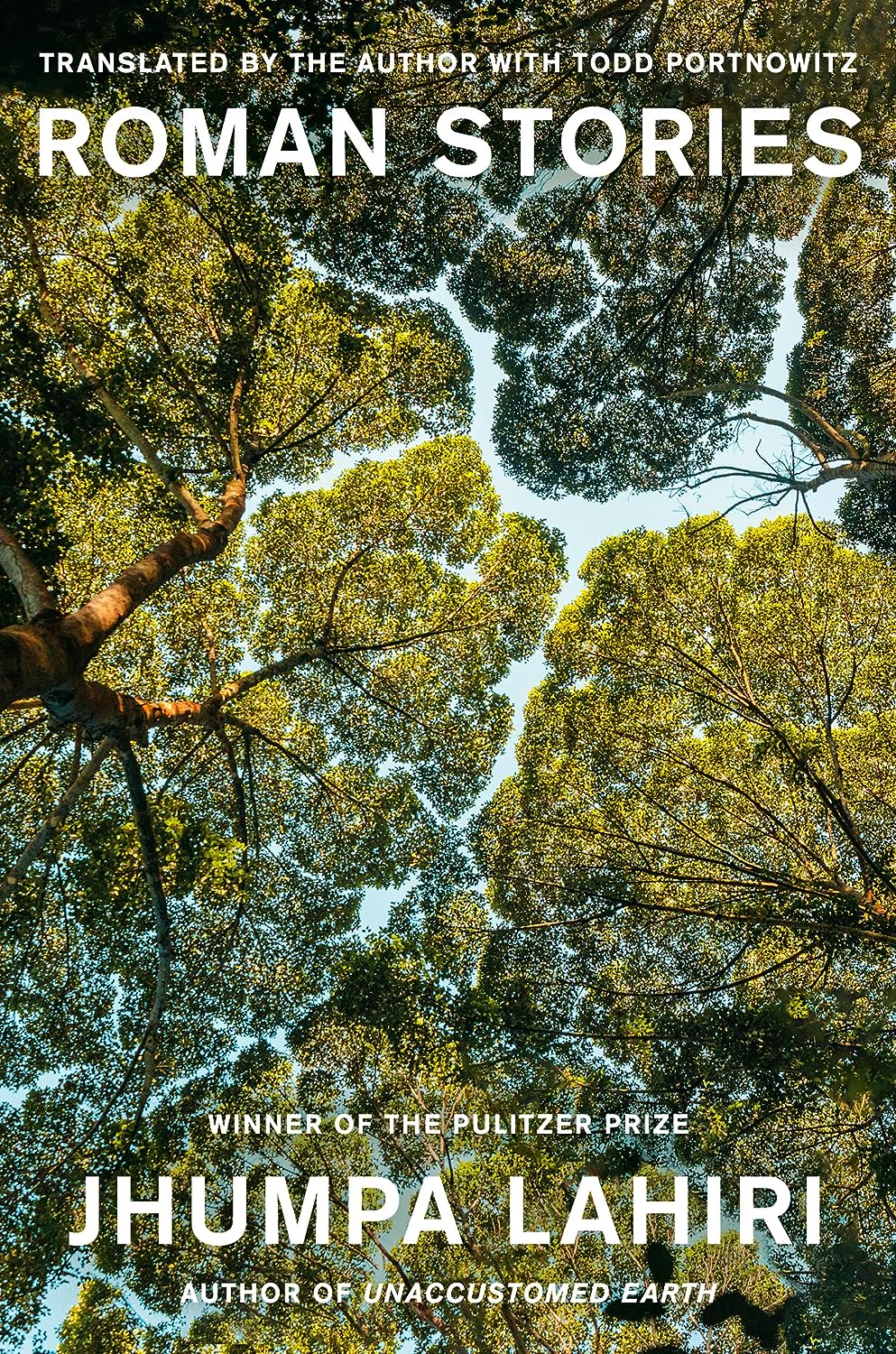
In some ways, Roman Stories is a return to form for Jhumpa Lahiri. She blazed onto the scene by winning a Pulitzer Prize for her debut, a story collection called Interpreter of Maladies (a book I named as one of the best of the last 25 years). Roman Stories is Lahiri’s first foray back to the short story form since 2008’s Unaccustomed Earth. For people who love both Interpreter of Maladies and Unaccustomed Earth, this new book is a slam dunk. It has everything you love about a collection of Lahiri’s short stories: elegant, precise prose; sharp observation; a keen eye for detail; and effortless storytelling.
But Jhumpa Lahiri is an author who never quite does the same thing twice, so even as Roman Stories in some ways represents a return to form, it also represents the next phase in her evolution as a writer. It’s a fascinating, exciting process that has made her an author I follow eagerly.
Lahiri’s previous novel, Whereabouts, was a huge departure for her. Not only was it Lahiri’s first fictional work written in Italian and then translated into English, it was a big stylistic departure that, in my opinion, paid off big time.
Roman Stories was also written in Italian and translated into English (this time with the help of Todd Portnowitz), but this time around Lahiri’s fiction feels like an outgrowth of her own experiences living in the titular city in a truly fascinating way. Each story in this collection features a protagonist who is unsettled in some way, building a sense of unease that develops as the pages progress. The unsettled feeling could come from a sense of dislocation (being in a place other than where you are originally from), from a threat of violence, or, most often, from racist provocations that threaten to tip into violence.
These stories are a complex love letter to Italy and its capital, embracing all of the city’s beauty and vibrance as well as its quirks, eccentricities, and the stubborn traditionalism of its residents. The stories also play with form in interesting ways, often fracturing the narrative or the perspective to zoom in and out and give the reader a wider sense of scope. It is tricky work that feels simple and elegant because while you are reading it, you are in the hands of a master storyteller.
 Supposedly Fun