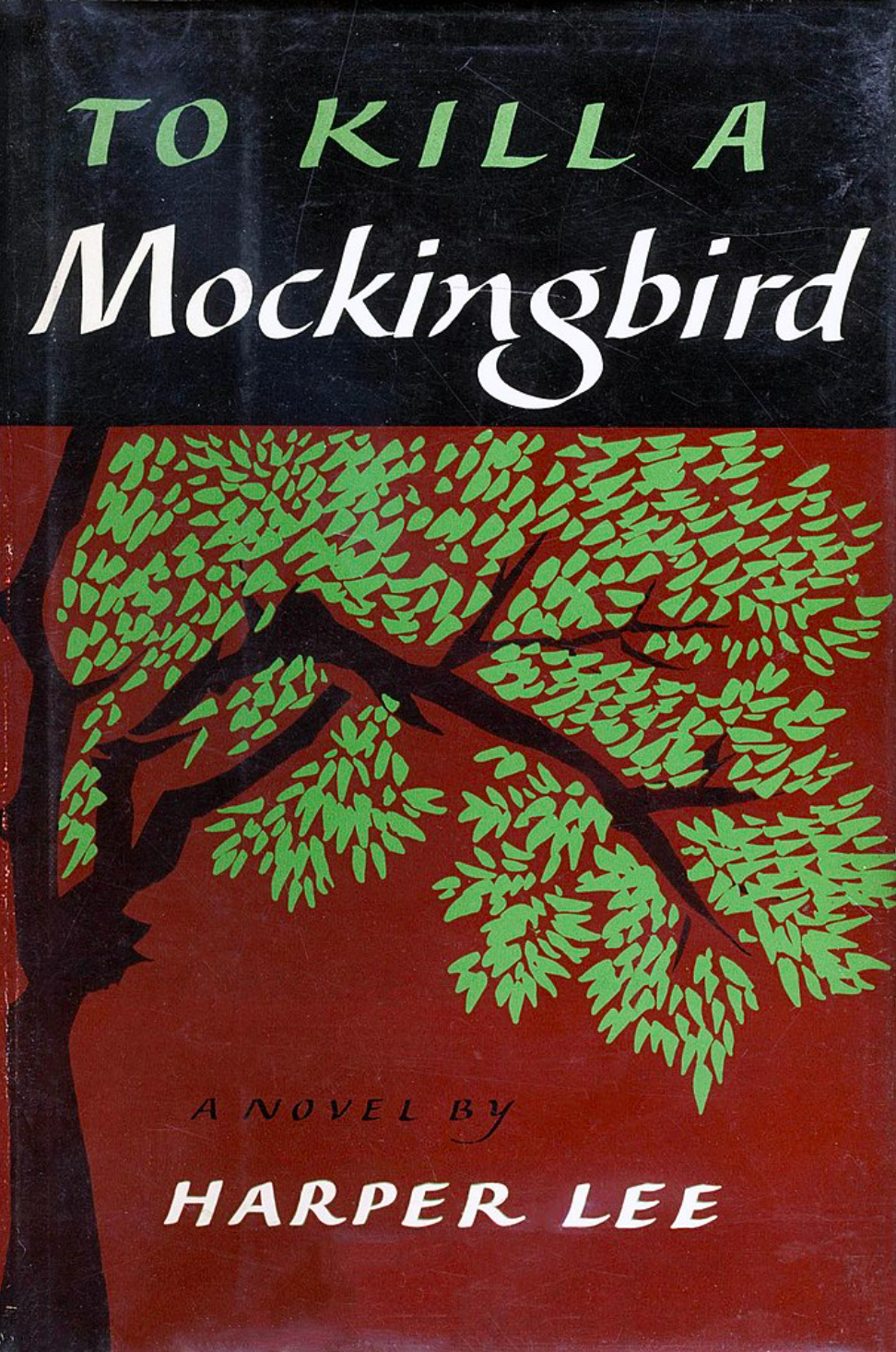
While there have been detractors from the beginning, Harper Lee’s To Kill a Mockingbird has been a beloved American novel since its publication in 1960. It was instantly successful, won a Pulitzer Prize for Fiction, and quickly spawned a film adaptation that helped secure its legacy as an American institution.
That may sound like we’re talking about Gone with the Wind again, and there are other similarities in that both books deal with racism in the south, but To Kill a Mockingbird is decidedly less insidious than Margaret Mitchell’s propaganda piece.
In this Pulitzer Prize deep dive, we’ll look at how To Kill a Mockingbird came to be so well-loved, and we’ll look into some of the controversies and complaints people have about it.
And just a warning: there will be spoilers for this book.
Snapshot: 1960
To Kill a Mockingbird was published on July 11, 1960. Here’s a look at what was going on in the world that year.
In bookstores:
I had expected To Kill a Mockingbird to appear on Publishers Weekly‘s list of bestselling books for the year, but it didn’t appear until 1961. Instead, the bestselling book of 1960 was the book that won the Pulitzer Prize that year: 1959’s Advise and Consent by Allen Drury. It was followed by a previous Pulitzer Prize-winner, James A Michener, this time for Hawaii.
The Nobel Prize for Literature was awarded to French author Saint-John Perse “or the soaring flight and the evocative imagery of his poetry which in a visionary fashion reflects the conditions of our time.” Philip Roth won the 1960 National Book Award for Fiction, but in those days that prize operated on a system like the Pulitzer–where it was awarded after the eligibility year. So 1960 novels competed in 1961, where Harper Lee lost to former Pulitzer Prize-winner Conrad Richter for his novel The Waters of Kronos.
In movies:
You can see the vast systemic changes that Hollywood would undergo in the 1960s already at play at the box office in 1960, where Spartacus reigned supreme but was followed by Alfred Hitchcock’s Psycho. Ben-Hur won Best Picture at the Academy Awards, which celebrated films released in 1959 (The Apartment would go on to win the prize the following year).
In the news:
The Greensboro sit-ins, where four black students attempted to be served at a Woolworth’s lunch counter in (you guessed it) Greensboro, North Carolina, took place on February 1–triggering similar nonviolent protests across the south.
In March, the United States announced that 3,500 soldiers would be sent to Vietnam.
The new (and current) American flag was flown for the first time on July 4 (Hawaii had become the fiftieth state in 1959).
And on November 8, John F. Kennedy defeated Richard Nixon to become President of the United States. Kennedy and Nixon had participated in the first televised presidential debate in September.
All of these events (and many more) may be found on the Wikipedia page for 1960.
What Is To Kill a Mockingbird About?
You probably already know, but just in case: To Kill a Mockingbird is a coming-of-age story told from the perspective of Jean Louise Finch, a tomboy who goes by the nickname Scout, as she grows up during the Great Depression in the town of Maycomb, Alabama.
The first section of the book is largely plotless as we get to know six-year-old Scout, her older brother Jem, their father Atticus, Scout and Jem’s friend Dill, and the citizens of Maycomb. What storyline there is in this section follows an obsession the kids have with the Finch’s reclusive neighbor, Arthur “Boo” Radley. Boo Radley is the subject of a great deal of local lore, and children in Maycomb balance terrible fear of him with intense curiosity as they continue to spin urban legends about why he hides away from the world (and what he might do if he came out into the world).
We follow the kids along three summers as they learn life lessons and begin the journey toward growing up. The book’s second section finds Scout’s father, Atticus, assigned to defend a black man named Tom Robinson, who has been accused of raping a white woman. Things get dark when a large segment of the town turns on Atticus, who insists that Robinson gets as close to a fair trial as possible. And it keeps getting darker, but somehow the book never loses an overall warm and friendly feel–probably because we are firmly situated in the perspective of a child.
At the end of the book, Boo Radley saves Scout and Jem from a revenge attempt by Bob Ewell, the father of the woman who accused Tom Robinson of rape. It is decided that rather than drag the quiet, reclusive Boo Radley through the process of an investigation and possible trial, it would be better to report that Bob Ewell died after falling on his own knife.
This book also has one of my all-time favorite endings to a book ever. When Scout stands on the Radley porch and sees the neighborhood through a new point of view, replaying the activities of her youth over again in her mind… it’s beautiful.
Why Did This Win a Pulitzer Prize?
The first reason is economics: To Kill a Mockingbird was a successful book that was well-received by critics and audiences.
The second reason is that it got over the hump of Harper Lee being a debut author when the Pulitzer jury found some of the more experienced competition to be well-intentioned misfires (more on that later).
The third reason is that To Kill a Mockingbird ticks a lot of boxes for the Pulitzer Board in the first fifty years of its existence. It loved books about race (Scarlet Sister Mary, for example). It loved books about the South, like (shudder) Gone with the Wind. The Great Depression is represented, and so are coming-of-age novels. The Pulitzer Board was also fascinated with novels that reflect the changing tides of American society, and the way To Kill a Mockingbird perfectly captures Depression-era nostalgia with the context of the burgeoning Civil Rights movement had to feel like catnip.
Why is To Kill a Mockingbird so Beloved?
Boy, is this book loved. Americans named it “The Great American Read” during a PBS series that aimed to find America’s best-loved novel. Announcing the results, PBS noted that To Kill a Mockingbird had “kept the lead for the entire five months of voting, despite strong competition from the rest of our five finalists. It also topped the list of votes in every state except North Carolina (who went for Outlander) and Wyoming (who preferred Lord of The Rings). Such widespread support from readers across the country make To Kill a Mockingbird a worthy winner of The Great American Read.”
Even British librarians declared that To Kill a Mockingbird is the book every adult should read before they die. It beat the Bible!
This is a tricky question to answer. Something doesn’t become a cultural institution overnight. It happens over time, which is why it’s so incredibly rare–and difficult to predict. Even when a book isn’t initially successful, it can become a classic (The Great Gatsby, for example). But To Kill a Mockingbird isn’t just a classic: it’s ubiquitous in discussions of great literature.
I think the first stepping stone is the film adaptation, released two years after the book. The same foundation helped Gone with the Wind become more than just a bestselling book. And while Gone with the Wind has, um, problems, To Kill a Mockingbird is a lot more wholesome–even though it has also had detractors from the moment it was published.
It’s not just that these two books had film adaptations. Lots of movies have film adaptations. These books had iconic film adaptations. They are widely seen, widely loved, and that adoration has sustained for generations.
That ties into the next stepping stone: the educational component. Because if your school was anything like the ones I went to, you usually watched the movie after finishing the book.
Although it has been a target for book banners from day one, To Kill a Mockingbird has been consistently taught in American schools. That is probably why studies have shown this is the most widely-read book in the United States. Even people who don’t read as a hobby are still likely to have read it because it was assigned to them in school. I moved around a fair amount during my school years, so the books I read in school tend to wildly differ from other people, but no matter where I lived, people had read To Kill a Mockingbird in a class at some point.
But ultimately, movies don’t make people remember books, and reading something in school doesn’t mean you’ll love it forever. There must be something in the book that speaks to people, generation after generation. I think a massive part of the appeal is that To Kill a Mockingbird covers many complex, thorny, and unpleasant topics but somehow still manages to feel comforting. As I said earlier, I think a lot of that comes down to the genius way Harper Lee inhabits a child’s perspective. When you read, say, Beloved, it can feel like an unrelenting assault (which is the point). The unpleasantness here is filtered: Scout is only beginning to understand it.
I think nostalgia also has a universal appeal. Even if you didn’t grow up in the Depression, and even if you aren’t entirely done growing when you read this book for the first time, Scout’s experience of growing up is relatable… to a large portion of the population. We all tend to look back at our childhood–even if childhood wasn’t that long ago for the reader. It’s why nostalgia trends keep happening. It’s why all these popular movies from the 70s, 80s, and 90s keep getting revisited with sequels, reboots, and requels. To Kill a Mockingbird taps into that.
It’s also a book with many lessons to teach you without making you feel like you’re eating your vegetables. The notion of walking a mile in someone else’s shoes? I still try to live that lesson. And I read this book for the first time in ninth grade! I’m 41!
Whatever the reason, I think there’s every reason to believe that To Kill a Mockingbird will continue to be beloved well into the future.
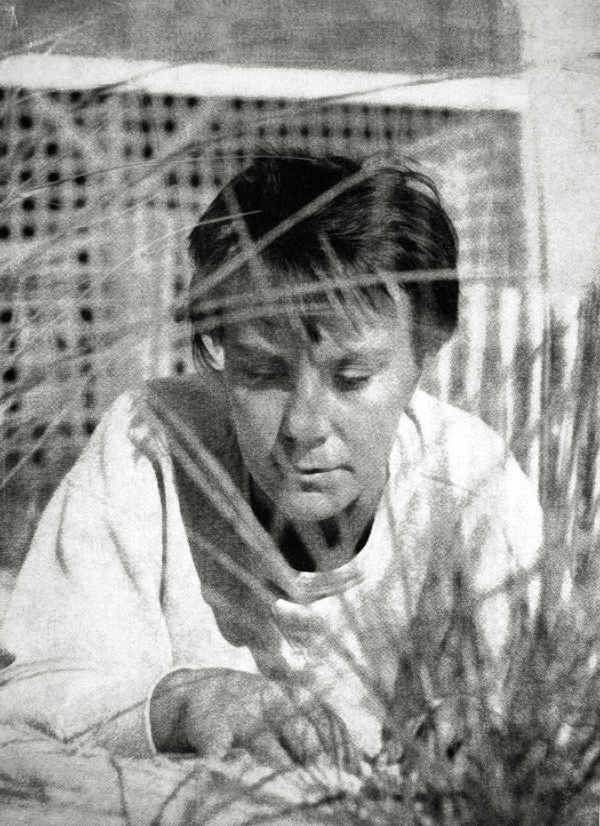
Who Is Harper Lee?
Nelle Harper Lee was born in Monroeville, Alabama on April 28, 1926. She was named after her grandmother, Ellen, but her parents spelled her name backward, which is why it has an e at the end. Although she was known as Nelle among friends, she decided to use her middle name as her pen name because she was worried that people would mistake her name for ‘Nellie.”
She attended college but left one semester short of finishing her degree. She moved to New York City in 1949 and worked in a bookstore and as an airline reservation agent while writing in her spare time. She found an agent in 1956 and that same year, friends gave her a year’s wages as a Christmas gift so she could take time off to focus on her writing. The result was To Kill a Mockingbird.
Lee drew on her childhood and family for inspiration. Like Scout, Lee was the daughter of an attorney (who later signed autographs as “Atticus Finch”). Her mother’s maiden name was Finch. And the character of Dill is based on Lee’s childhood friend, Truman Capote. Yes, that Truman Capote. Lee tended to downplay the autobiographical details in the novel, but Capote indicated that there had been a real-life recluse on their street who helped inspire the character of Boo Radley.
The success of To Kill a Mockingbird surprised Lee and created a great sense of pressure for her (another parallel to Margaret Mitchell, who was so unsure how to follow up Gone with the Wind that she never published another book before she died in a car accident). Lee was also press-shy and tended to avoid interviews or public appearances. Ultimately, she never published another book (I don’t count Go Set a Watchman, and there will be more on that later). She had worked on a novel called The Long Goodbye, but never finished it. But if you’ve ever seen the movie Capote, you know that Lee helped Truman Capote research his book In Cold Blood.
Some believe a conspiracy theory that Lee never wrote another novel because Truman Capote had helped her with To Kill a Mockingbird (and that this is why a debut novelist was able to write such a superlative book). There are a lot of variations on this idea out there. I don’t believe it.
If you want an overview of Lee’s life after To Kill a Mockingbird and why she never published again, I recommend Casey Cep’s Furious Hours: Murder, Fraud, and the Last Trial of Harper Lee. The first half is a true crime story that I thought was just okay, but the second half follows Harper Lee as she researches the crime to shape an idea for a novel that never comes to fruition.
Biographical details were taken from Harper Lee’s Wikipedia page.
Is To Kill a Mockingbird Problematic?
That depends on your perspective. Historically, To Kill a Mockingbird has been understood to be about compassion, understanding, and racial equality. It does have a lot of uses of the n-word, but this is a case where the argument that you should take into account when a book was written and when it is set really does come into play. Scout is a child growing up in Alabama during the Great Depression. She doesn’t understand that the n-word could be offensive. Over the course of the book, she gets some lessons about it being a word she shouldn’t use, but the argument is that it makes her sound “common,” not that it’s demeaning. That does reflect the time. And the word is so commonly used around Scout that she just sees it as a descriptive term.
However, some have dismissed To Kill a Mockingbird as just another white savior narrative in recent years (in other words, a story where a white person acts heroically on behalf of people of color). Specifically, in this case, the idea is that white people can feel better about racism and inequality because Atticus stands up for Tom Robinson.
I don’t think the lesson in this book is that Atticus is a white savior figure, I think the lesson is how scary it is that it would have been so easy for Atticus to do nothing. It would have been easy for him to stand aside and let Tom Robinson go to death row. On top of that, it’s horrifying that the injustice of what happens to Tom Robinson is so separated from the white citizens of Maycomb that they could go about their lives without being bothered by it at all–if they choose to live that way. Harper Lee is condemning the type of complacency that allows that to be the way the world works.
I think she’s also subtly condemning the way most white citizens in the town are perfectly happy to stand aside and let Atticus fight alone for the soul of the town. Even people who agree with Atticus don’t speak out about it or push back. There’s a passivity that allows change to move at a glacial pace–if it moves at all.
Harper Lee is also making it clear that what happens to Tom Robinson is a tragedy–and the blame for that tragedy is entirely on the white citizens of Maycomb. Because it’s obvious that Tom Robinson is innocent. The fact that he is arrested, put on trial, and convicted anyway is deplorable. And it only happens because the white people of Maycomb allow it to happen. You cannot read this book and come away without thinking that this is a tragedy. To me, that negates the white savior aspect.
Part of the genius of To Kill a Mockingbird is that its coming-of-age structure allows Harper Lee to explore how racism is taught and enforced. She also treats it as a tragedy that Scout, Dill, and Jem may grow up not to see the injustice of racism around them. Without the influence of someone like Atticus, they may eventually accept it as the way of the world. During Tom Robinson’s trial, Scout has to take Dill outside because he starts crying about the injustice of what is happening. There, they are comforted by Dolphus Raymond. There’s a lot I could say about the character of Dolphus, but for time I’ll just focus on what he says to them about this subject:
“Because you’re children and you can understand it,” he said, “and because I heard that one–“
He jerked his head at Dill: “Things haven’t caught up with that one’s instinct yet. Let him get a little older and he won’t get sick and cry. Maybe things’ll strike him as being–not quite right, say, but he won’t cry, not when he gets a few years on him.”
“Cry about what, Mr. Raymond?” Dill’s maleness was beginning to assert itself.
“Cry about the simple hell people give other people–without even thinking. Cry about the hell white people give colored folks, without even stopping to think that they’re people, too.”
“Atticus says cheatin’ a colored man is ten times worse than cheatin’ a white man,” I muttered. “Says it’s the worst thing you could do.”
Mr Raymond said, “I don’t reckon it’s–Miss Jean Louise, you don’t know your pa’s not a run-of-the-mill man, it’ll take a few years for that to sink in–you haven’t seen enough of the world yet. You haven’t even seen this town, but all you gotta do is step back inside the courthouse.”
To Kill a Mockingbird, page 201
So, from one perspective, To Kill a Mockingbird is about an exceptional white man standing up against racism. But that’s not the whole story. To call this a white savior story is to ignore the way Harper Lee is aware of how Atticus is exceptional and frames the story to amplify the tragedy that more white people are not like him.
Another way in which To Kill a Mockingbird is much more complex in its approach to race than it may appear on the surface is how Scout grows to a deeper understanding of Calpurnia, their maid and cook. For the book’s first half, Calpurnia only exists to fill a functional role for Scout. But when Calpurnia takes Scout and Jem to her own church one Sunday morning, it forces Scout to see that there’s much more to Calpurnia. “That Calpurnia led a modest double life never dawned on me. The idea that she had a separate existence outside of our household was a novel one, to say nothing of her having command of two languages” (p. 125).
And because Scout is too young to realize that Maycomb society would rather keep races separate, on the following page, Scout asks Calpurnia if she can come to her house sometime. She wants to get to know Cal as a person, but for the rest of the novel, her aunt prevents her from seeing this through–again tying back to the idea that racism and segregation are instilled and supported over time by people learning to enforce them.
I’ve seen Calpurnia referred to as a “mammy” type, but I think this does a disservice to the complexity of Scout’s relationship with her. She’s a mother figure and a servant, a friend and a foe–all depending on Scout’s emotion at that moment (and whether Cal is chastising Scout for poor behavior). She’s also someone who has a life outside of the Finch home.
I’ve also seen some people criticize To Kill a Mockingbird for getting its audience to sympathize with Tom Robinson by making him a saintly character. The subtle implication is that people of color should be exceptional in order to be allowed rights. But I think the way there are various reactions when Calpurnia takes Jem and Scout to her church is a subtle nod to the idea that the black citizens of Maycomb are just as variable as the white people we spend more time with. And at the end of the day, if Tom Robinson does appear saintly, this was not an uncommon storytelling trope in the 1960s. Sidney Poitier became one of the most popular actors of the decade (and became the first black man to win an Oscar for Best Actor). Still, by the 1970s, his career languished due to criticism that he only portrayed upstanding, saintly men.
Furthermore, something that struck me on this reread is that many people, myself included, assume the metaphorical mockingbird of the title only refers to Scout’s neighbor, Boo Radley. If you’re unfamiliar, the title comes from how when Scout and Jem are gifted air rifles for Christmas, Atticus tells them it’s a sin to kill a mockingbird because mockingbirds don’t do anything to anybody. That’s why at the end of the book, Sheriff Tate protects Boo Radley by declaring that Bob Ewell fell on his knife and that’s it. But Tom Robinson is deliberately also framed as a mockingbird. It’s just that in his case, no one protects him (or can protect him) from harm. So if Tom Robinson appears saintly, maybe it’s because he’s also an extension of the book’s central metaphor.
Is To Kill a Mockingbird perfect on race? No. But I think it’s remarkably forward-thinking and complex for its time. I also think it has good intentions, which is more than you can say about many books from its era (and earlier).
Are There Adaptations or Sequels?
The 1962 film adaptation is a classic in its own right, and many cite Gregory Peck’s Academy Award-winning turn as Atticus as one of the greatest movie performances of all time. Aaron Sorkin also adapted the novel into a play that hit Broadway in 2018.
The question of sequels is a bit thornier. Go Set a Watchman was published in 2015 by HarperCollins. It was initially promoted as a sequel, but the truth is that it was actually a first draft of To Kill a Mockingbird. Harper Lee’s editor, Tay Hohoff, thought the draft showed promise, but she thought the best part of the book was a flashback to Scout’s childhood. So the novel was rewritten completely, retitled Atticus, and then retitled again to To Kill a Mockingbird because Harper Lee didn’t want to put so much emphasis on a single character.
The focus of the story, the nature of certain characters, and more altered as they went through drafts and finalized the book that was actually published. So it’s bizarre that HarperCollins initially announced Go Set a Watchman as a sequel. It’s not.
Then came the controversy around how Go Set a Watchman came to be published in the first place. HarperCollins claims that the manuscript was found in 2011 during an appraisal of Harper Lee’s assets and that Lee herself cooperated with (and was enthusiastic about) the publication after so many years. But their version relies on the notion that Go Set a Watchman is a separate novel that was intended for publication, and that just isn’t the case. It also flies in the face of statements Harper Lee made over the years that she had never written another novel.
Furthermore, the timing of the publication feels bizarre: the announcement came not long after Lee’s sister and caregiver, Alice, passed away. There have been accusations that the publisher exploited the absence of a caregiver to get permission to publish what is actually an early draft. There have been people, including Harper Lee’s friend, former neighbor, and biographer Marja Mills, who stated that Harper Lee was incapable of consent at her age and in her condition. There have been others who claim she was capable of consent. Long story short: it’s a mess.
Regardless of what the truth of the situation is, I don’t like the look or feel of Go Set a Watchman or how it ended up in bookstores, so I will not read it. If you want to educate yourself on it, you can start on the Watchman Wikipedia page and explore the sources it cites.
Is To Kill a Mockingbird Readily Available?
You better believe it. It’s never been out of print.
Is To Kill a Mockingbird the Great American Novel?
If you follow along, you know that I’ve made the concept of the Great American Novel a part of my Pulitzer Prize Project. That’s because I think the Pulitzer Prize (at least as it was originally conceived) goes hand in hand with the notion of The Great American Novel, essentially a mythic quest created to legitimize American art on the world stage. In my longer post about the Great American Novel, I conclude that no one book can sum up all the things America is. But if you had to pick one, To Kill a Mockingbird manages to cover a lot of those bases. It would probably be my pick for the role.
What Was To Kill a Mockingbird‘s Competition for the Pulitzer?
The other finalist that year was The Child Buyer by Jon Hersey, who had already won a Pulitzer in 1945 for A Bell for Adano. The jury recommended that the prize go to Harper Lee, and the Pulitzer Board agreed.
In those days, the jury was required to submit a report to the Board along with their recommendation. That report mentioned two powerhouse novelists who went on to win their own Pulitzer Prizes: William Styron and John Updike. But according to John Hohenberg’s The Pulitzer Prizes, the report dismissed both Set This House On Fire and Rabbit, Run, noting that the authors had “Both lavished major talents on minor themes.”
Having read (and despised) Rabbit, Run, I can only say that I am glad it was dismissed so handily.
Should To Kill a Mockingbird Have Won the Pulitzer Prize for Fiction?
In case you can’t tell by now, let’s make it very clear: I absolutely think To Kill a Mockingbird deserved to win the Pulitzer Prize for Fiction. I also think it is one of the best Pulitzer Prize-winners–and furthermore, I think it is one of the best American novels. It is certainly one of my favorite books of all time.
Other Pulitzer Prize Deep Dives
His Family (1918) • Now in November (1935) • Gone With the Wind (1937) • The Grapes of Wrath (1940) • To Kill a Mockingbird (1961) • The Color Purple, Alice Walker (1983) • Lonesome Dove (1986) • Interpreter of Maladies (2000) • March (2006) • Tinkers (2010) • Less (2018) • The Netanyahus (2022) • TIE: Trust and Demon Copperhead (2023) • Night Watch (2024)
Deep Dives On Pulitzer Years With No Winner
 Supposedly Fun