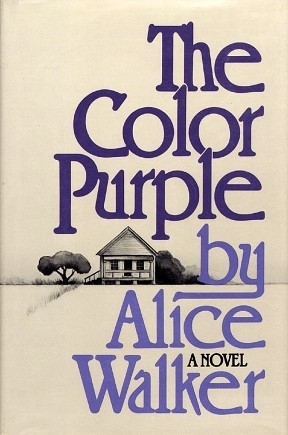
The Color Purple is an American literary masterpiece that won a Pulitzer Prize and has been adapted as a film twice (and also as a Broadway musical). It’s a cultural institution in the United States–a book that has earned literary respect and popular appeal. It’s on a similar level as To Kill a Mockingbird and, well, Gone With the Wind. I don’t think it rides as high as those other two, but it’s not far off.
I read it for the first time about twenty years ago and have frequently cited it as one of my favorite books. Indeed, when I recently ranked the Pulitzer books I have read so far, it was close to the top. But in recent years, author Alice Walker has revealed that she has some controversial opinions. I would go so far as to describe them as hateful opinions fueled by online conspiracy theories. Should that impact how we see her work?
In this Deep Dive, we’ll discuss The Color Purple, its legacy, and what happens when a complicated author produces a book we love.
And just so you know, there will be spoilers.
Snapshot: 1982
This is fun for me because 1982 happens to be the year I was born. Now, just for clarity’s sake: The Color Purple won the Pulitzer Prize for Fiction in 1983, but because the Pulitzer is awarded the year after the eligibility period, it was published in 1982. That’s why we’re looking at what was happening in the world in 1982.
In bookstores:
In a perfect encapsulation of my childhood, Publishers Weekly‘s bestselling book of 1982 was the novelization of the film E.T. I didn’t like that movie as a kid, but it was everywhere. And people kept giving me E.T. merchandise that I didn’t want.
Anyway, the Nobel Prize for Literature went to Gabriel García Márquez “for his novels and short stories, in which the fantastic and the realistic are combined in a richly composed world of imagination, reflecting a continent’s life and conflicts.” The National Book Award was in a brief phase where they awarded two prizes for fiction–one for hardcover and one for paperback. They were also briefly on the same calendar as the Pulitzer Prize. The hardcover prize went to Rabbit is Rich by John Updike (which won the Pulitzer Prize the same year) and paperback went to William Maxwell for So Long, See You Tomorrow. The Color Purple went on to win the hardcover fiction prize the following year, when it also won the Pulitzer.
In movies:
Since it was already the bestselling book of 1982, you can probably guess that E.T. was also the year’s highest-grossing movie by a wide margin (Raiders of the Lost Ark came in second). Chariots of Fire won Best Picture at the Academy Awards, but the 1982 release that went on to win the following year was Gandhi.
In music:
Michael Jackson took the world by storm, releasing Thriller in November. It went on to be the bestselling album of the following two years. I’m telling you, the year I was born is packed with memorable pop culture.
In the news:
Speaking of pop culture, in March Claus von Bülow was found guilty of attempting to murder his wife (Jeremy Irons won an Oscar for playing Bülow a few years later in the movie Reversal of Fortune). The ten-week Falklands War began in April between Argentina and the United Kingdom. Argentine forces surrendered on the day I was born in June. Finally, in September the Tylenol Murders took place, where seven people were killed by Tylenol laced with potassium cyanide–a case that has never been solved, but is the reason every medication is tamper resistant these days.
More news on the 1982 Wikipedia page.
What Is The Color Purple About?
To answer that question in thematic terms, The Color Purple is about sisterhood (both literal and spiritual). It’s about women coming together and forming a community in the face of a world that wants to treat them as second-class citizens. It’s also about actualizing and believing in yourself to take control of your own destiny. It’s about not letting the traumas in your past define who you are in the present or in the future. It’s about fighting for yourself when others want you to be silent or control you. And it’s also about the cruel legacies of the slave trade both here in the United States and in Africa (Homegoing by Yaa Gyasi would be a terrific companion book). Lastly, it’s a profoundly lesbian book about accepting who you are, even if who you are stands against what traditional society would be willing to accept.
There are three oppressive systems at play in The Color Purple. First, there is colonialism (AKA the often genocidal overtaking of the world by white people who subjugate people they deem inferior). Second, there is the world of men, who enforce and perpetuate a patriarchal system that denies women of their rights, their joy, and their ability to express themselves. Third, there is the more complex oppression of religion. I say it’s more complex because this is a book that believes religion and spirituality are good, but frequently paints organized religious systems as corrupt tools of oppression. The characters who find peace in this book often determine that they can enjoy their religious beliefs on their own terms–and that going to church often pushes you further away from a relationship with God.
Practically, this is an epistolary novel following the life of Celie. For the first half of the book, Celie is writing to God. In short bursts, she relates the unhappy story of her life so far. She has been abused and called ugly by the man she knows as her father, who has nevertheless raped her and fathered two children that he subsequently sent away from her. We later learn that he is not, in fact, her father, but the trauma of incest and assault still linger. She was married off to a man Celie only refers to as Mister for most of the book (she does actually use his first name in a passing moment at the very end that signifies her and his growth as people). Mister was actually interested in Celie’s sister, Nettie, but settled for Celie because he was promised that she would take care of his children. That adds to Celie’s belief that she is ugly and unwanted, and that the only person who loves her is Nettie. And even that is taken from her because after Nettie briefly comes to live with Celie, Mister sends Nettie away. The trauma of this separation is also something Celie carries with her.
For a while, Celie remains an insecure, desperately unhappy woman who quietly goes about the business of life without actually living. Things begin to change when Shug Avery, a woman Mister has been infatuated with for years, comes to stay with them. This forms a romantic triangle. Celie and Mister are both in love with Shug, and Shug engages in romantic relations with both of them separately.
Eventually, Celie and Shug discover that Mister has been hiding letters from Nettie. In the second half of the book, we catch up to Nettie’s story. She has been living with missionaries who adopted Celie’s children and eventually ends up in Africa with them. Celie’s relationship with Shug and the promise of a reunion with Nettie inspire Celie to take charge of her destiny. She grows in confidence, leaving Mister to make her own path in life. She starts a business sewing pants for women, which is a scandalous idea at the time, and learns to stand on her own two feet. Her relationship with Shug ends on a somewhat ambiguous note (Shug returns to her after another relationship ends, but will it last?), but Celie has found her strength so she’ll be okay regardless. She even forms a respectful friendship with Mister, who learns to see her as a human after she leaves him.
But best of all, Celie and Nettie finally reunite, and Nettie brings Celie’s now-grown children back to her.
As a point of interest, the character of Celie was based on Alice Walker’s grandmother.
What Does the Title of The Color Purple Mean?
During a conversation about religion, Shug Avery tells Celie about how she believes God works, and how she has a relationship with God on her own terms (outside of the church). During this conversation, Shug notes that she believes “it pisses God off if you walk by the color purple in a field somewhere and don’t notice it.” The implication is that we need to look for and appreciate the beauty in the everyday world. It’s so easy not to notice the good things or take them for granted. It’s kind of like telling someone to stop and smell the roses.
Of course, the color purple itself has symbolic meaning and there’s more to think about here thematically, especially since this conversation is a key moment in Celie’s self-actualization, but this will do for now.
Why Did This Win a Pulitzer Prize?
The original intention of the Pulitzer was, at least implicitly, to help legitimize American art by recognizing important American novels in real time. This is an instance where that worked. The Color Purple has weighty things to say about heavy topics, but it’s also an enjoyable story with solid, memorable characters. If you need proof, just look at how many times it has been adapted for stage and screen–and how it has remained in the conversation about great American literature ever since. This is that rare book that is continually respected by both critics and audiences. The Color Purple won because it was recognized as the American masterpiece that it is.
Is This Novel Any Good?
In a serious bit of shade, The New York Times had this to say about The Color Purple in its article about the best books of 1982: “Everyone who read Alice Walker’s ‘The Color Purple,’ which did not make the list, agreed that its first 75 pages contained probably the best fiction written this year but that the quality was not sustained.” Ouch.
I think that’s also deeply unfair. But it was interesting to track the changes after the first 75 pages to see what The New York Times Book Review believed took away from the quality. After the first 75 pages, Celie begins her lesbian affair with Shug. And not long after that, Celie finds the letters from Nettie, which begins the portion of the novel that heavily deals with the continuing colonial problems in Africa,
In my deep dive on Andrew Sean Greer’s Less, I referred to it as the first Pulitzer Prize-winning novel to significantly center an LGBTQ+ storyline and character. Some people pushed back and asked about The Hours, which in my memory is only partly a queer story (but a reread will determine if that is fair or not). Oddly, no one mentioned The Color Purple. The most surprising thing about this reread is just how profoundly lesbian it is. For a novel published in 1982 that achieved mainstream success, that’s groundbreaking. But it’s also interesting that it’s not a part of the book most people remember or focus on.
Still, despite clearly having detractors at The New York Times, it’s clear that The Color Purple has deservedly been recognized by many as an American classic. It’s a great book, and one that holds up pretty well over time.
I will say that Nettie’s letters from Africa bear a heavy thematic burden that causes some drag on the pace. Those chapters tend to be longer than the rest, which are usually only 2-3 pages. I only mention that because I think one of the things that makes The Color Purple so easy to read despite a lot of heavy trigger warnings is that the short bursts make it digestible. Nettie’s letters feel more like info dumps than smooth progression of a narrative. It almost feels like ideas for a separate book that don’t quite belong here. Ultimately, I think it works, but if I were to identify a weak point in the novel, it’s that.
But overall, it’s a great novel.
Who Is Alice Walker?
Alice Malsenior Tallulah-Kate Walker was born in Eatonton, Georgia on February 9, 1944. Her parents were both sharecroppers. She was enrolled in school at just four years old and due to segregation, was only able to attend schools that were designated for black students. After graduating as valedictorian, Walker was given a full scholarship to Spelman College but transferred to Sarah Lawrence, where she graduated.
Her love for reading and writing is the result of an unfortunate accident: at eight years old, Walker’s brother shot her in the eye with a BB Gun, and since her family did not own a car they could not immediately get her medical attention. As a result, Walker is permanently blind in her right eye. Following this incident, she discovered reading and writing.
Walker has also been a devout activist her whole life. She was part of the Civil Rights movement, met Martin Luther King, Jr., and participated in the 1963 March on Washington. She also established a brand of feminism known as womanism, an early attempt at intersectional feminism that focused on women of color. She has also been very active in the conflict between Israel and Palestine, often referring to Israel as an apartheid state and encouraging performers to boycott performances in Israel.
Some of Walker’s activism has earned her a reputation as a controversial figure, which we will discuss in a moment.
Walker is also one of a handful of authors to win both a Pulitzer Prize and a National Book Award for the same book. That is something that is a lot more rare than people tend to think it is.
These facts were all taken from Alice Walker’s Wikipedia page.
Is The Color Purple Problematic?
No, but Alice Walker is.
Controversy began with her activism and continued with The Color Purple, which has frequently been banned or challenged since it was published. You can probably guess that there’s pushback to the depiction of sexuality in the book, but that isn’t all. There have also been complaints around the negative portrayal of black men in The Color Purple–and about the portrayal of black women.
There’s a lot to talk about with Alice Walker’s activism (good, bad, and also in between), and I’m going to skip over a lot of that to focus on the big thing: the fact that Walker has elevated antisemitic conspiracy theories. The New York Times notes that “She has praised David Icke, who has written that Holocaust denial should be taught in schools and that the Talmud is a racist document. He is also known for a conspiracy theory that a group of child-sacrificing lizard people, many of whom are Jewish, are running the world.” In a separate article in The New York Times, Walker said this about Icke’s work: “In Icke’s books there is the whole of existence, on this planet and several others, to think about. A curious person’s dream come true.” Critics also point to “To Study the Talmud,” a poem Walker wrote that has been criticized for antisemitic sentiment.
Questioned about the accusations of antisemitism, Walker claims that her criticism is not against Jewish people but against Israel. Essentially, she says that what people see as antisemitism from her is really just an extension of her activism on the topic of Israel and Palestine.
People close to Alice Walker tend to remain mum on the topic, although Walker’s ex-husband has said that he never saw evidence of antisemitc beliefs during the time they were married. But others who know her have said that her continued public support of Icke and “To Study the Talmud” is dangerous and harmful. I tend to agree. It’s just not good if numerous people have pointed out that you are holding up a set of ideas that have been harmful to a group of people, and your response is to deny that and continue to support the person and their ideas. There’s an unwillingness from Walker to learn and grow on this topic.
What I think this represents is how activism can be warped by misinformation into something toxic in the internet era. Walker had a genuine political interest in Israel and Palestine–and current events have shown that there was cause for concern there. But as Walker got older and the internet rose to prominence, it appears that Walker’s activism took a turn toward the toxic. And she just isn’t willing to interrogate that.
The same is true of Walker’s recent public defense of J.K. Rowling. When I first heard about this, I guess I wanted to believe that Walker’s statements were being taken out of context, or that she was misguidedly defending Rowling without understanding how harmful Rowling’s attitude toward trans people is. Unfortunately, I looked up the statement Walker had published on her website and it’s actually worse than what had been reported. Walker and Rowling appear to have united in a belief that accepting a trans person’s rights is a dangerous step toward erasing all of womanhood. They have taken something good, feminism, and somehow warped it into a panic that inhibits the rights of another group. Walker has done something particularly damaging in this regard because she is attempting to weaponize her status as a “wise elder” to give herself the appearance of being reasonable. She is also attempting to position a belief that trans rights erase women’s rights as a reasonable point of view. It isn’t.
I will also say this: it’s interesting, given the stance Alice Walker has recently taken against transgender rights, that part of the patriarchal critique in this novel also explores the oppressive nature of gender expectations. It is frequently commented on that strong women in The Color Purple are behaving as men, but men are portrayed in a similar trap. For instance, Harpo likes cooking and cleaning, but those are not things a man is supposed to do or enjoy. And as soon as Harpo marries Sofia, he begins to see her strength and outspoken nature as problems of obedience that he needs to physically fight against. The end result is that neither Harpo nor Sofia are satisfied.
This means that at some point in the past, Walker understood that gender expectations were a trap that left countless people feeling unfulfilled. But today, she uses those expectations as a weapon.
Should Alice Walker or The Color Purple Be Canceled?
The short answer is this: not in my opinion. But let’s get into the complexities.
First of all, the term canceled has gotten far too politicized and way overblown. I’m using it here because it’s just easier. For my purposes, cancellation just means “Should I continue supporting this author with my money?” Kind of like deciding whether or not to boycott something. The author is allowed to exist and continue making money off of their work, you just get to decide whether or not to opt into helping them make a paycheck. Conservatives will balk and say something about First Amendment rights, but that’s not what we’re talking about. We’re talking about deciding whether or not to financially support an artist. You get to make that decision. And the only way to properly do it is to be informed.
Many people aren’t aware of Walker’s controversial beliefs, or dismiss them as if they aren’t very serious. But recently, some have begun questioning why Walker gets a free pass, and I don’t think we’ll get a resolution on this. First, because we live in highly politicized times, and second because life and the universe are, frankly, too messy to offer tidy endings.
It also feels like our human instinct for things to neatly be categorized as good or bad means that the kneejerk reaction is to assume that we are either going to outright cancel The Color Purple and/or Alice Walker, or we’re going to forgive her completely.
Those are not the only two options.
One of the most immediate responses to the question of “canceling” a public figure is that an audience should separate the art from the artist. The idea is that we can appreciate the artist’s output without needing to consider the artist–what they believe, what they support, and who they harm. Most of the time, this strikes me as a naive response, because when you’re talking about, say, Woody Allen, the artist frequently is the art. Woody Allen has written vaguely fictionalized versions of himself in many of his movies. Many of his characters have uncomfortable relationships with women who are supposed to be off-limits. The artist is inextricable from the art.
The same is true when someone like Peter Handke wins a Nobel Prize for Literature. It feels silly for someone to say that you should separate the harmful ideas Handke has espoused from his art, particularly when many of his writings reflect those exact ideas.
The political has a way of bleeding into the personal, no matter how much we would prefer to believe that we can separate them.
However, I do think that Alice Walker and The Color Purple are one of the rare instances where it is possible to achieve this separation. Yes, there are political ideas in the novel that reflect Walker’s beliefs and opinions. But The Color Purple has nothing to say about Judaism or transgender rights. Most people in 1982 wouldn’t have even understood the term transgender. This is a novel that skirts the negative parts of Walker–or, perhaps, one that was published long before some of those beliefs turned into something toxic.
The Color Purple is not a book in need of re-examination like Gone With the Wind. And it’s not a case like To Kill a Mockingbird, where some current discourse has attempted to (unfairly, in my opinion) brand a book as problematic when it isn’t. The Color Purple is great. It’s Alice Walker who needs to be looked at in a more complicated light.
It is clear at this point that Walker is incredibly resistant to evolving on issues where she’s been problematic in recent years. And while I do think we should continue to interrogate her for her positions and why she holds them, and while I do think she should continue to be held accountable for positions that are harmful to other people, I think we mostly benefit from using Alice Walker as a cautionary tale.
Instead of canceling Alice Walker, we can discuss her evolution from activist to spreader of harmful misinformation and, hopefully, understand how to avoid these pitfalls ourselves. In an age where misinformation is all too easy to access, I hope we can learn from Alice Walker how to avoid falling prey to conspiracy theories. And I hope we can learn that when confronted about topics we’ve gotten wrong, we can learn from the experience instead of digging in.
Personally, I don’t feel comfortable giving Walker more of my money, but I purchased my copy of The Color Purple twenty years ago, and when I tracked down a hardcover, I bought it used from a seller on eBay–so the proceeds don’t go back to Walker. I’m also probably not going to read any of her other books. But I’m not going to remove The Color Purple from my shelf. I’m not going to try to pretend it doesn’t exist. I think it’s a good book that people could benefit from reading. But every time she comes up, I will point to the larger context around Alice Walker so other people can make up their own minds.
The only note I will leave you on is this: perhaps you don’t think this is a big deal because you aren’t Jewish or transgender. But consider how Walker’s toxic activism would feel if it was directed at you.
Are There Adaptations or Sequels?
Indeed there are. The Color Purple was first adapted for film in 1985 with Steven Spielberg controversially directing, and Whoopi Goldberg and Oprah Winfrey earning Oscar nominations for their roles as Celie and Sofia, respectively. Oprah helped finance the 2005 adaptation of The Color Purple into a Broadway musical. The musical was brought back in 2015 in a staging that was even more celebrated than the original. That is what led to the film adaptation of the musical, which is hitting theaters on Christmas 2023 (as I am typing this).
You can find my comparison of the book and both film adaptations here.
Is The Color Purple the Great American Novel?
If you follow along, you know that I don’t believe any book can encapsulate this complicated country’s entire experience. The best you can do is come up with a shortlist of books that head in that direction, and yes, The Color Purple should be included.
What Was The Color Purple‘s Competition for the Pulitzer?
The other finalists for the Pulitzer Prize were Anne Tyler’s Dinner At the Homesick Restaurant and Chaim Grade’s Rabbis and Wives. This is an interesting mix, especially when you look at the inclusion of Chaim Grade, who had passed away when Rabbis and Wives was nominated for the Pulitzer. His work has since faded into near-total obscurity–especially when compared with the other two finalists. It is not easy to track down copies of his books, which have been out of print for a long time. And the sentiment on Rabbis and Wives seems mixed, even in 1982. It feels like the intention of the Pulitzer jury was to attempt to shine a light on a lesser-known writer who had passed away in an attempt to help secure some sort of legacy for his work. Unfortunately, it didn’t take (except for the fact that we’re talking about him now). It feels like the nomination is less about the individual work and more about recognizing the career of an author who passed away.
Dinner At the Homesick Restaurant is a different story. Anne Tyler earned three nominations for the Pulitzer in the 1980s, and Dinner was the first. She was subsequently nominated for The Accidental Tourist and won on her third try: Breathing Lessons. Her books are still very much in print and celebrated–including Dinner At the Homesick Restaurant (although not on the scale of The Color Purple). I read Dinner to prepare for this post and I have to say, it’s an incredible novel.
Other notable books from 1982 were Gloria Naylor’s The Women of Brewster Place and A Boy’s Own Story, Edmund White’s queer classic. It’s interesting that a time when queer stories were so frequently overlooked or erased, three books that unapologetically featured queer stories or characters were put out into the world. And all three have become classics.
Ann Beattie’s story collection, The Burning House, was another celebrated book published in 1982.
Should The Color Purple Have Won the Pulitzer Prize for Fiction?
It’s interesting that 1982 had so many classic books to offer for consideration. And I have to say, Dinner At the Homesick Restaurant will be one of my favorite reads from this year. It may even grow to be an all-time favorite of mine, but I’ll have to wait to see how I feel when recency bias is not such a problem.
I also think it’s safe to say that The Color Purple was much easier to recognize than other now-classics that discuss either the black experience in this country (The Women of Brewster Place) or queer stories (A Boy’s Own Story).
But still, I think this is a case where the Pulitzer Board got it correct when it selected The Color Purple. And if you don’t believe me, just look at the surprisingly popular appeal of a novel about black life, sexual assault, racism, incest, abuse, sexuality, gender expecations, and more.
For the record, if I were judging my finalists would be The Color Purple, Dinner At the Homesick Restaurant, and The Women of Brewster Place, and my winner would be The Color Purple.
Other Pulitzer Prize Deep Dives
His Family (1918) • Now in November (1935) • Gone With the Wind (1937) • The Grapes of Wrath (1940) • To Kill a Mockingbird (1961) • Lonesome Dove (1986) • Interpreter of Maladies (2000) • March (2006) • Tinkers (2010) • Less (2018) • The Netanyahus (2022) • TIE: Trust and Demon Copperhead (2023) • Night Watch (2024)
Deep Dives On Pulitzer Years With No Winner
 Supposedly Fun