Hi, my name is Greg, and I’m an Academy Awards nerd. I’ve spent years watching (and rewatching) the movies that have won the major Oscar categories, and I thought it would be fun to share my thoughts on the winners (and what didn’t win).
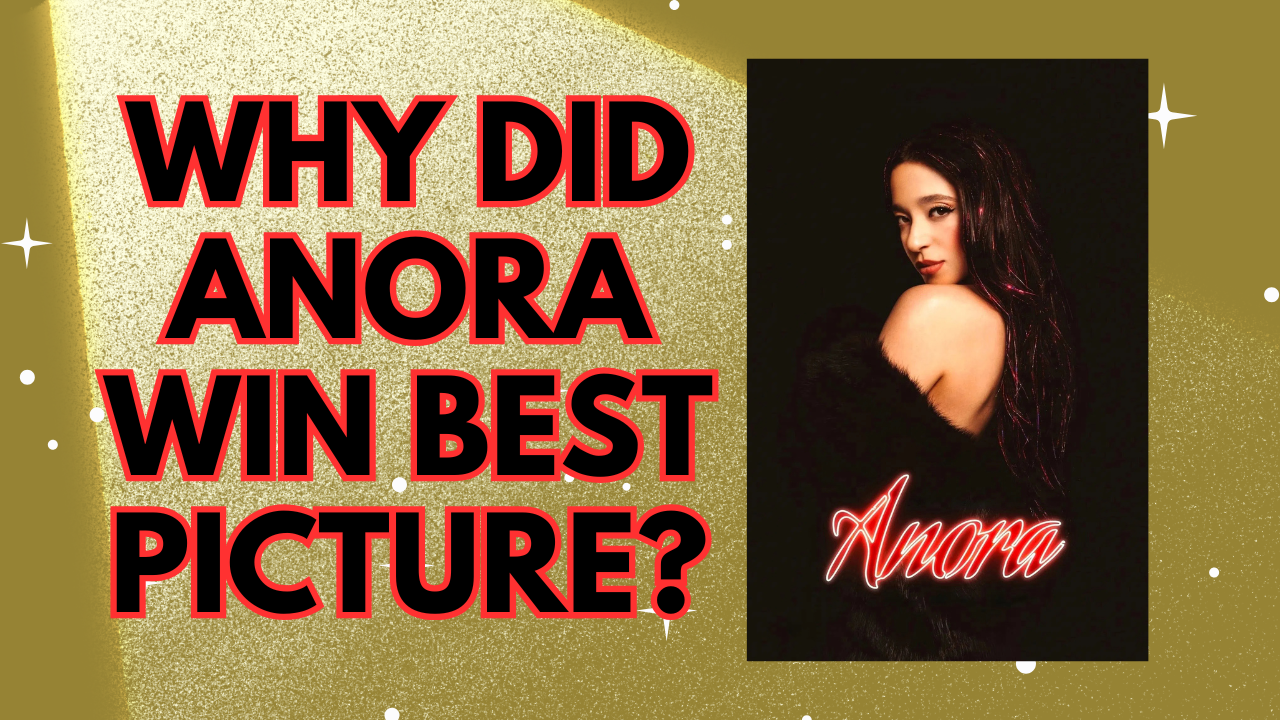
To kick things off, it makes sense to look at the most recent major winners as I’m writing this. And why not start with last year’s Best Picture winner, Anora? This was a wild Oscar year. It had everything. Scandals, downfalls, dark horse candidates becoming frontrunners, frontrunners sinking like stones, surprise nominees–I’m not kidding, it was a ride. And we’ll get into all of that.
As an aside, for recent winners, my purpose is a bit different because we don’t have the sense of hindsight that comes with time. All I can do is tell you what these wins feel like in real time–a sort of time capsule people can enjoy now and in the future.
And lastly, there will be spoilers for Anora ahead, so if you don’t want to know what happens, maybe come back after you’ve seen the movie. I don’t think I’ll include spoilers in most of my Best Picture conversations, but the ending of Anora is relevant to the film’s overall meaning and impact. If you want to watch now but avoid the spoilers, skip over the section on what Anora is about.
What is Anora About?
Anora (Mikey Madison), or “Ani” as she prefers to be known, is a young stripper. She’s brash and bold, quick to righteous anger and violence if provoked. She meets Vanya (Mark Eydelshteyn), the immature son of a Russian oligarch, who impulsively marries her on a booze-fueled trip to Las Vegas. Ani initially refuses because she doesn’t believe he means it, but he wins her over by insisting he really does love her. It’s important that she gets convinced to enter this marriage because as we see later, both the marriage and the Cinderella story it nods to really mean something to her. It’s not necessarily the money (although that certainly helps).
When Vanya’s powerful parents in Russia learn of the marriage, they order his godfather to annul it. Vanya panics and runs, leaving Ani to deal with the mess. She refuses to comply with the annulment but reluctantly agrees to help them find Vanya, clashing with the family’s enforcers every step of the journey. The whole middle section of the movie follows their comic misadventures. Along the way, one of the enforcers, Igor (Yura Borisov), quietly observes Ani and begins to treat her with kindness–which she tends to respond to with vicious insults.
Ultimately, Vanya betrays Ani by agreeing to end their marriage. Realizing that Vanya is too cowardly, selfish, and immature to stand up for her, Ani signs the annulment papers.
In defeat, we begin to understand what Igor has been seeing throughout the movie: that beneath Ani’s bravado lies a self-loathing young woman burdened by deep trauma. A young woman weary of being pushed around and treated like nothing. A young woman who desperately latched onto a Cinderella fantasy only to see it blow up in her face.
This is beautifully captured thematically by a discussion Ani and Igor have about her real name (enhanced by the fact that her full name is the movie’s title). Throughout the movie, she vehemently corrects anyone who calls her Anora, which makes Igor curious. He looks her name up and discovers that it means honor, light, and grace. These are traits that Anora doesn’t see in herself.
The film ends when Igor drives Anora home and gives her the wedding ring that had been taken from her. In response, Anora initiates sex with Igor until he tries to kiss her, causing her to break down in tears.
Many viewers have different responses to this ending. For me, I think Anora has learned to think of sex as a commodity. He does something kind, so she offers him sex. But she’s also unused to kindness, so when Igor attempted to passionately kiss her, she didn’t know how to respond. She hasn’t known how to respond to his kindness throughout the movie. His gentleness and genuine interest in her as a person cause the dam to break, so all the trauma and humiliation from what has happened to her pour out uncontrollably. I think it’s beautiful, and I’m not ashamed to admit that I got a little misty.
What Other Awards Did Anora Win?
Anora had six Oscar nominations and won five. The only category it lost was Best Supporting Actor for Yura Borisov (were I in charge of these things, I would have given it to him). Mikey Madison was a surprise winner for Best Actress. In addition to Best Picture, it won director Sean Baker three individual prizes in Best Director, Best Original Screenplay, and Best Film Editing. Combined with the Oscar he got for Best Picture, Baker tied Walt Disney’s record for most Oscars won in a single night. Baker does have the distinction of being the only person to win four Oscars in a single night for the same film (although technically, Bong Joon Ho also tied this record for Parasite. The reason he doesn’t officially count is that his fourth Oscar, for International Feature, goes to the country, not the director).
Anora was launched into the Oscar conversation after it won the Palm d’Or at the Cannes Film Festival. For a while, it was drowned out by enthusiasm for other contenders. It had five nominations at the Golden Globes and lost all of them. It did make the annual top ten lists from the American Film Institute and the National Board of Review, but until early 2025 it didn’t seem like there was much room for Anora on the Oscar stage. It didn’t even seem like a winner in the Best Actress category because Demi Moore was taking up all the oxygen there, but just as in Best Picture, Anora turned out to be a bigger threat than anyone would have thought. But part of what made 2024/2025 such a wild year for the Oscars is Anora‘s placement on the back burner during the early campaigning stages.
All of a sudden, that changed. Other contenders like Emilia Pérez lost momentum, and the race for Best Picture became up for grabs. People genuinely didn’t know what was going to win anymore, so speculation started to run a bunch of different ways. That ended when Anora started building momentum after winning Best Picture at the Critics’ Choice Awards (even though it lost its other six nominations), the Producers Guild of America’s Best Picture prize (a steadfast indicator of how the Academy will vote), and Sean Baker won the Directors Guild’s annual prize. All of a sudden, there was clarity about what would win Best Picture and Best Director. So if you filled out an Oscar ballot in December or January, you would have voted for something other than Anora in all likelihood. If you filled out a ballot in February, you would have gone all in on Anora and director Sean Baker.
What Were the Other Nominees?
The full list of Best Picture nominees was as follows:
- Anora
- The Brutalist
- A Complete Unknown
- Conclave
- Dune: Part II
- Emilia Pérez
- I’m Still Here
- Nickel Boys
- The Substance
- Wicked
Emilia Pérez had the most nominations of any movie with 13, winning 2 (Best Supporting Actress for Zoe Saldaña and Best Original Song). The Brutalist and Wicked followed with 10 nominations (Brutalist winning 3 and Wicked taking 2). A Complete Unknown and Conclave each had 8 nods (Conclave won Best Adapted Screenplay while Complete Unknown went home empty-handed). Dune: Part II and The Substance clocked in with 5 nods (each winning two). I’m Still Here had three nominations, winning only for Best International Feature. And finally: Nickel Boys had two nominations but did not win either.
What Movies Failed to Get Nominated for Best Picture?
I don’t want to use the popular term here and talk about what was snubbed, because that implies a level of intention behind the failed nomination that I don’t think can really exist in an organization as vast as the Academy. But obviously, there were other movies bidding for Best Picture noms that didn’t get there.
- Although Sing Sing was always unlikely to win, it felt like there was a good push for this movie to get in the Best Picture race. Nickel Boys likely took its place as the unexpected honor-just-to-be-nominated film.
- Fans of A Real Pain knew it would likely get in for Best Supporting Actor and Best Original Screenplay, but they also hoped they could elevate it into the Best Picture conversation. Of all the also-rans, I think this one was probably the closest to getting a nomination.
- There was early chatter about Gladiator II and whether or not it could follow its predecessor into the Best Picture race, but those odds diminished pretty quickly after the film was released.
- Oscar pundits seemed very hopeful that Challengers would stay top of mind for Academy voters since it had been released earlier in the year, but the gloss of newer movies may have been too much.
- The presence of a Mike Leigh film on the release schedule, and strong buzz around star Marianne Jean-Baptiste’s performance, made it seem like Hard Truths could be a contender. Ultimately, a campaign never seemed to get off the ground, and both it and Jean-Baptiste went unrecognized.
- Although Joker earned multiple nominations, its sequel, Joker: Folie á Deux, quickly sank.
- The Sorkin-esque qualities of Saturday Night (and the Oscar history of director Jason Reitman) briefly made it feel like it could be a contender, but those odds also sank quickly.
Is This a Good Movie?
I realize that many people have been put off by Anora, and I understand why, but I like it. For the first thirty minutes or so, I really thought I was going to hate it because it’s so loud and Vanya is so annoying. But once Vanya goes on the run and it becomes something of a road movie, Anora quiets down and begins building a great deal of emotional heft. It’s genuinely funny, for one thing, and the subtle development of Anora as a character makes her situation by the conclusion feel devastating.
Sean Baker excels at movies about people who slipped through the cracks or who exist on society’s margins, and Anora is his best realization of those themes yet. Over the last year, since it won Best Picture, I’ve actually thought about Anora a lot. That indicates that it has stayed with me, which is a very good sign. I’ve also had some very interesting conversations with people about Anora (whether they liked it or not).
In short, I would absolutely classify this as a good movie.
Why Did This Win Best Picture?
As I indicated earlier, by the end of 2024 and into the beginning of 2025, the Best Picture race felt relatively wide open. I say relatively because some movies were nominated but were pretty easy to dismiss as contenders (Nickel Boys, Dune: Part II, and The Substance). Emilia Pérez had been the frontrunner but became embattled in fierce backlash and controversy, which diminished its chances. For a moment, it seemed as though Wicked would be the consensus choice and win because of the tiered balloting system the Academy uses (which essentially means that voters rank every nominee, so a movie that ends up toward the top of most ballots could end up emerging victorious).
Anora‘s dominance just as the voting period was running was a surprise to Oscar pundits (and fans) everywhere. Let’s break down each nominee one by one to talk about why I think they ultimately sank while Anora rose.
- The Brutalist: Similar to Emilia Pérez, for a moment it looked like this would be a serious contender. It won Best Picture (Drama) at the Golden Globes. But it never quite reached the heights of Emilia Pérez, and complaints about the film and its self-seriousness began to take over the conversation. I saw more than one pun riffing on the movie’s title and on how brutal it was to watch this three-and-a-half-hour movie that deliberately withholds its meaning until the very end. This may have had a better chance in the days of the Academy’s fixation on prestige movies, but in the current climate, it became a tough sell pretty quickly. There was also a damaging controversy surrounding the movie when it came out that AI had been used to smooth out the performances. Director Brady Corbet said that it was only used to smooth out the accents of stars Adrien Brody and Felicity Jones so they would sound more accurate, but the whole thing left a pall over The Brutalist, even though Brody won Best Actor.
- A Complete Unknown: After Emilia Pérez and The Brutalist began to deflate, A Complete Unknown briefly seemed like the next logical contender, largely due to the benefits of a late release and a wave of critical support. By the time Oscar noms came out, the temperature had cooled and Anora began to heat up, so even though A Complete Unknown received 8 nominations, it did not win any. And to be clear, I don’t think it lost all those categories because people just lost enthusiasm for the film. It definitely had (and has) fans. But in every category in which it was nominated, there was either a much more obvious choice, a stronger frontrunner (most specifically in the case of Best Supporting Actress, because Zoe Saldaña was always going to win that category), or, in the Best Actor race, another contender managed to edge it out.
- Conclave: The story here is similar to the trajectory of A Complete Unknown: once Emilia Pérez fell, this seemed like a logical successor to the Best Picture throne. But the film’s ending was divisive, which meant that although this remained a strong contender, it became clear that it wouldn’t win once Anora really got off the ground. If Anora hadn’t gained so much momentum, it’s possible Conclave could have come out on top despite the quibbles some Academy members had with the conclusion. But we’ll never know, because Anora did take off.
- Dune: Part II: This is absolutely a situation where the nomination was the prize. Given that reaction to Dune: Part II was much more tepid than it was for its predecessor, I’m not even sure many Academy pundits expected it to be nominated at all.
- Emilia Pérez: The rise and fall of Emilia Pérez during the Oscar campaigns for the 2025 ceremony is one for the record books. When it debuted at the Cannes Film Festival, Emilia Pérez managed to overshadow Anora in terms of buzz–even though Anora took home the top prize, the Palm d’Or. Emilia Pérez walked away with the Jury Prize and a Best Actress award for its ensemble, plus official frontrunner status for Best Picture. But as the weeks went by, a counter-narrative began to build. Mexicans and Mexican-Americans objected to its focus on cartel violence as a negative stereotype (as well as the fact that the film didn’t hire Mexican actors for many key roles). LGBTQ+ people and activists voiced concerns about aspects of how the film portrays the title character, a transgender woman who fakes her death to transition, but who ultimately can’t escape her violent tendencies and domineering personality. Spanish-speaking people began to complain about inauthenticity and a disjointed perspective, including the fact that Selena Gomez was not fluent in Spanish, so her dialogue in that language had terrible diction. This situation was not helped by the fact that director and screenwriter, Jacques Audiard is French, and mentioned in interviews that he had not done any research into Mexico and its language. On top of all this, after Karla Sofía Gascón made history by becoming the first transgender performer to earn an Oscar nomination, racist tweets she had made surfaced. Seriously, we don’t have time to cover everything. Head over to the movie’s Wikipedia page to see more. The trajectory of this movie is truly wild. It’s certainly the biggest Oscar downfall in recent history (perhaps even of all time).
- I’m Still Here: This movie certainly had support from critics and Academy members, including a vociferous Brazilian contingent that pushed hard to get recognition for I’m Still Here. But it turned out there was a ceiling for how high they could push, and Best International Feature turned out to be it. Perhaps if it hadn’t been the clear winner in that category, I’m Still Here could have given Anora a run for its money (and indeed, some believed that it stood a real chance in a hazy Best Picture year, but in the end it turned out not to be a hazy Best Picture year at all).
- Nickel Boys: This adaptation of Colson Whitehead’s Pulitzer Prize-winning novel struggled against the fact that audiences had a very love-it-or-hate-it reaction to the film. Some believed the unique first-person perspective was audacious and revolutionary, others found it annoying and try-hard. Given that, it’s genuinely surprising that Nickel Boys was nominated here, and I suppose that speaks to the enthusiasm of its supporters. But in a ranked balloting system, the naysayers would have dragged down any chance Nickel Boys had at winning. It was also a small, lesser-known (and probably less seen) film than any of its competitors.
- The Substance: In the old, pre-diversification days of the Academy, The Substance likely would not have had as much nomination success as it did. It’s gross, it’s bizarre, and it’s aggressively out there. It’s also stylish, well-directed, and filled with incredible performances, though, so it’s not all that surprising that the current Academy handed it five nominations (and two wins). But unlike Everything Everywhere All At Once, the odds for The Substance pointed to a Best Actress win instead of Best Picture (and then it didn’t even win Best Actress).
- Wicked: As I mentioned earlier, until Anora became ascendant, some Oscar pundits believed that Wicked would have an edge in the Best Picture race because it would likely be toward the top of many ballots, giving it a boost in the tiered balloting system. Wicked was largely inoffensive (unlike The Brutalist, Conclave, Emilia Pérez, and The Substance), it was, well, popular (unlike Nickel Boys), less disappointing than Dune Part II, and less divisive than Anora and, to a lesser degree, A Complete Unknown. But there was also the fact that this was only half the story of Wicked, and a concluding chapter was scheduled for release the following holiday season. Perhaps it would be better to wait for the conclusion (Return of the King style) than to jump the gun. But once Anora got moving, it became a moot point anyway. And as it turned out, the second part, Wicked: For Good, was not as well liked.
On top of all this, I should talk about the Sean Baker factor. I’m not planning to do deep dives into the Best Director race, but I think Baker is a big part of why Anora ended up being so successful with the Academy. He’d become a buzzy director after Tangerine became an indie success in 2015. He followed that with The Florida Project in 2017, which brought him into the Academy conversation (although ultimately, the film only yielded a nomination for Willem Dafoe in Best Supporting Actor). His next movie, 2021’s Red Rocket, was not an Academy contender by any stretch, but it continued to get his name out there as a director doing interesting work.
All this to say that Sean Baker was primed for an Academy breakthrough. The fact that he’s a multi-hyphenate added to Anora‘s charm to Academy voters. He directed the film, he wrote it, he edited it, and he produced it. In any other year, in any other context, Sean Baker and Anora may have struggled to break through. But in this year, in this context, it was a perfect storm. A director that Academy voters found intriguing, with a rising career promising more interesting films in the future, and a movie that they genuinely liked.
Should Anora Have Won Best Picture?
While I confess that I didn’t find 2024 to be a particularly strong year for cinema, I do think the right film won from the crop of contenders. I might have liked to see Small Things Like These, a great adaptation of one of my favorite books, among the nominees, but I would still vote for Anora over that.
Sure, Conclave had real-world relevance when an actual conclave to select a new Pope got underway not long after the film’s release, but ultimately, it’s not a movie that stayed with me very much. And while I admired Sing Sing greatly, I would also opt for Anora over it.
As for the rest of the nominated films, I wasn’t a fan of A Complete Unknown, which failed to really impart the significance of the events it uses as a climax and felt too much like a standard music biopic for me. I thought The Brutalist was interminable, although the cinematography and performances were great. I didn’t like the first Dune, and when the sequel got mixed reviews, I felt pretty secure opting out. I did like Emilia Pérez when I saw it, but as soon as I heard the critiques, I reconsidered because they were pretty damning, and the more I thought about it, the grosser it felt. I think The Substance is stylishly and boldly filmed, and Demi Moore and Margaret Qualley are great in it, but the film itself left me cold. The very premise makes no sense to me (what does Demi Moore’s character actually get out of this arrangement?). And Wicked is a perfectly fun and pleasant movie-going experience, but not a Best Picture winner to me.
The only nominees I haven’t yet seen are I’m Still Here and Nickel Boys. It’s possible my opinion will change once I fix that, but I feel pretty confident saying that the right film won. As I said earlier, it’s the only contender I’m still thinking about a year later.
Will Anora Stand the Test of Time?
I think it will continue to be good, but I don’t think Anora is a movie that people will be talking about fifty years from now. I still think it was the right winner, though. Not every year has a Godfather or a Sound of Music, and that’s fine.
Until next time, happy watching.
 Supposedly Fun